

ValueGuard NJ Home Inspections

New home inspections: Are they Necessary?

new home inspectionYes! All homes should be inspected whether they are one year old, or five years old or over 100 years! Even the best built new homes often have significant safety and repair issues that may go unnoticed for a long time by new home buyers. This may result in unexpected, costly repairs down the road. Knowing the condition of your new home is vital to making the right decisions. A review of ValueGuard home inspection reports on new homes revealed a startling number of safety issues and needed repairs that any homebuyer should know in advance of the closing. See what we found, click here.

To highlight our recommendation that all new homes should be inspected, we chose five recent new home inspection reports.  These new home inspections were conducted by ValueGuard ASHI Certified home inspectors.

The following major concerns, safety issues and repairs were listed in recent new home inspection reports. You may be surprised by what ValueGuard's experienced home inspectors found!

• MAJOR CONCERNS (Examples found from recent new home inspections)

The furnace was inoperative at the time of the inspection.
The air conditioning system was inoperative at the time of the inspection.

• SAFETY ISSUES (Examples found from recent new home inspections)
The taped sprinkler head located in the master bedroom should be uncovered.
Several of the guards in the deck railing are bowed and the openings are large enough to allow a child to fall through.
The garage door opener did not automatically reverse under resistance to closing. There is a serious risk of injury, particularly to children, under this condition.
No anti-tip strap is installed at the range. Oven door was opened and pressure applied downward to determine the stability of the appliance. When pressure was applied, the oven started to tip forward. Possible safety hazard. Recommend installation of an anti-tip devise for safety.
The roof deck railing is loose and needs repair.

• REPAIR ITEMS (Examples found from recent new home inspections)
The top chord of a roofing truss located in the front attic space was sagging. This area, on the front of the roof, felt soft when walking across the roof. Strengthening the roof structure would resist further movement.
The downspout(s) should discharge water at least five (5) feet from the house. Storm water should be encouraged to flow away from the building at the point of discharge
Downspout(s) that discharge onto the roof should be extended to discharge directly into the gutters below. This condition, if left unattended, can result in premature deterioration of the roofing under the end of the downspout
Repairs to the roofing are needed. Damaged roofing material should be repaired. Any exposed nail heads should be sealed. All roof penetrations should be examined and sealed as necessary
The rear concrete patio should be sealed to the foundation wall.
Additional support is recommended for the joists on the rear staircase.
Additional caulking and sealing is recommended around the front dormer trim on the roof.
The seam between the vinyl siding and the brick veneer should be sealed.
Two outlets in the kitchen are inoperative.
The screen for the front third floor dormer window should be installed.
The missing trim in the kitchen should be repaired. The missing plate cover on the bottom of the dishwasher should be installed.
The front door seal is missing.
The cracked and poorly finished drywall on the inside of the front bedroom closet door jamb should be repaired.
The particle board shelf under the left side master sink is water damaged.
The driveway surface is in need of its finished top coat.
The water did not completely drain from the dishwasher.
The tub faucet is loose/not flush to the wall.
The GFCI in the master bathroom was found to be loose at time of inspection.
The light in the entry closet is inoperative.
The sinks in hall bathroom & master bathroom were observed to drain slowly.
The toilet in the hall bathroom is loose and should be secured.
The shower head in the hall bathroom is leaky. Repair or replacement is needed.
The waste piping is leaking.
Loose stairway handrails should be better secured.
The damaged rear spigot handle should be repaired/replaced. This spigot is also need of re-sealing to prevent moisture intrusion. (building wrap can be seen)
The missing and loose siding should be repaired/replaced to prevent wind damage and moisture intrusion.
The vinyl siding on the home was found to be abnormally wavy (above rear windows). Many times this is due to improper installation methods (nails too tight). It is recommended that a reputable siding contractor be contacted for potential remedies. Residing may be needed to remedy this problem. This can be a major expense.
The overhead garage door is in need of adjustment/repair to function properly (right door).
The furnaces are dirty and in need of cleaning.
Un-workmanlike repairs to the condensation line discharge pipes were noted on both furnaces (incomplete and loose putty found). These should be evaluated by the above HVAC specialist and repaired as needed.
The water heater should be elevated from the basement floor to prevent damage in the event of flooding.
The shower head in the master bathroom is leaking. Repairs are needed.
Two active waste leaks were noted visible from the basement (one by the master bathtub drain, and one directly above the water heater. These should be promptly repaired by a reputable plumbing contractor.
The sump pit should be covered for improved safety.
The fireplace hearth was not installed. This should be done prior to settlement.
The split shingles located on the cricket next to the chimney should be repaired and sealed.
The damaged and buried downspouts located on the sides of the home should be corrected at this time.
The kitchen cabinet over the stove top rubs when opening.
The missing casement window handles over the kitchen sink should be installed.

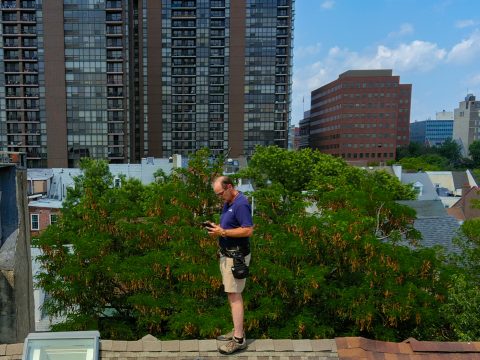
So when people ask us if they should have there new home inspected, we say YES! We highly recommend it! Contrary to what many people think, brand new homes should be inspected regardless of whether they will be conveyed with a builder's warranty. Our inspectors routinely observe structural, heating, cooling, roofing, exterior, plumbing and interior defects in new homes that may go unnoticed by both the builder and purchaser until they become a substantial problem. ValueGuard Home Inspections will perform its standard comprehensive building inspection prior to settlement and produce a full written report detailing the inspector's findings. The inspector will inspect the exterior, roof, gutters, chimneys, flashings, siding, trim, doors and site. He will also inspect the finished heating, cooling, electrical, plumbing, and interior systems.

It just makes good sense to have any home inspected, whether it is newly constructed, one year old or 150 years old. A professional home inspection will provide you with a better understanding of the condition of the home and how the various systems in the home operate.

For additional peace-of-mind, we also recommend that schedule a radon test with your new home inspection! ValueGuard certified radon technicians will perform a 48-hour tamper-resistant radon test with state-of-the art continuous rate, electronic monitors.

ValueGuard home inspectors have inspected and tested over 42,000 new and older homes in Southeastern Pennsylvania, the City of Philadelphia, Northern Delaware and Southern New Jersey since 1997. Can we inspect yours?

For a thorough home inspection and professional radon test, call us at 215-860-3150.


Velaro Live Help

Call 856-429-4188 now!
We have answers to your home inspection questions


Licensed, Certified Home Inspectors

BBB Accredited Business

BBB Accredited Business
A+ rating!


ASHI Home Inspectors

American Society of Home Inspectors

ASHI Certified Home Inspectors


credit card

We also accept personal checks, money orders and cash

You are here: Home